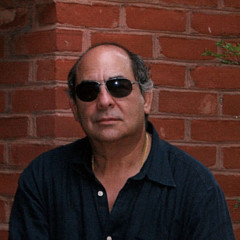
Getting To Know Rafael Salazar

Rafael Salazar

Founder of Motionalism | 82 Years Young

For more than six decades, Colombian born artist Rafael Salazar has explored the relationship between movement, emotion, memory and human transformation. It is an artistic journey that has continued to evolve throughout his life, responding to changing experiences, cultures and technologies without losing sight of the human emotions at its centre.

Today, at 82 years young, he continues that exploration through Motionalism, a contemporary artistic language centred on energy, silence, discernment and emotional motion.

“Motionalism™️ is not a style,” Salazar says. “It is a language.”
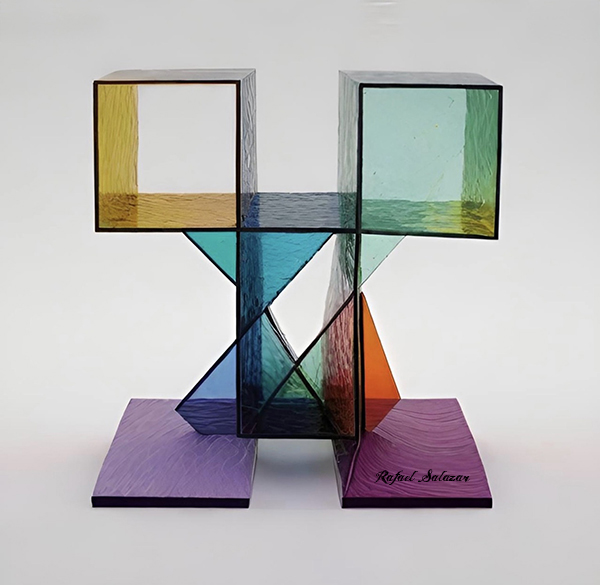
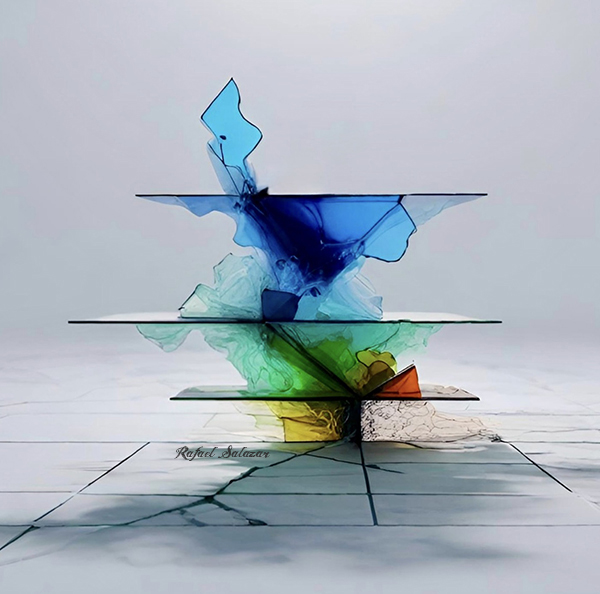
Geometric artwork by Rafael Salazar featuring transparent colored rectangular, triangular, and square forms in blue, green, yellow, orange, and violet.
Light becomes part of the structure.
Transparent geometric volumes intersect through color and light, creating a delicate balance between architecture, openness, and visual movement.
Copyright 2026 – All rights reserved by Rafael Salazar.

Born in Colombia and shaped by a lifetime of global experiences across the Americas, Europe and Asia, Salazar’s artistic journey has evolved far beyond traditional definitions of painting or sculpture. His work bridges instinct, abstraction, digital experimentation, philosophy and emerging technologies, while remaining deeply centred on human emotion and the ways in which people experience and interpret the world around them.

Rather than allowing a particular medium to define the work, Salazar places the idea and the emotional response first. The tools may change, but the underlying search remains remarkably consistent.

At the core of Motionalism is a simple but profound idea: movement is not only physical. It can also be emotional, psychological, spiritual and internal.

“Motionalism is the moment where motion becomes emotion,” he explains. “The invisible movement inside the human being becomes visible through art.”

This concept allows movement to exist without necessarily depicting something physically moving. It might instead be found in a change of feeling, an emerging memory, a tension between forms or that difficult to define instant when one emotional state begins to become another.
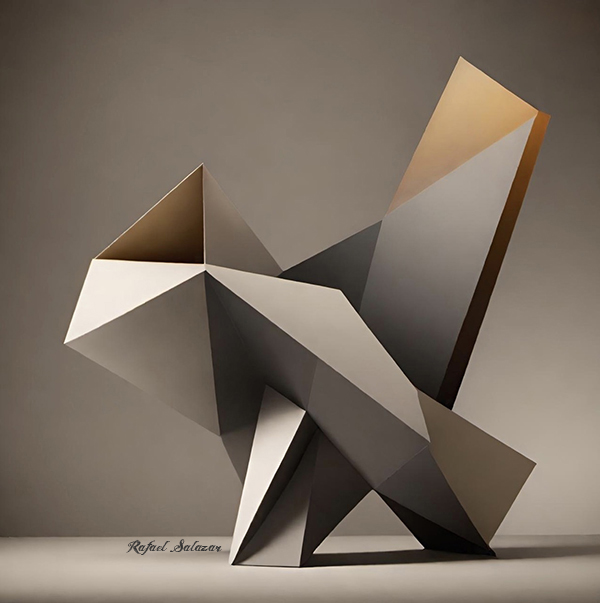
Geometric Motionalism artwork by Rafael Salazar composed of intersecting angular metallic planes in gray, black, cream, and warm gold.
Geometry moves through tension.
Angular planes intersect and counterbalance one another, turning apparent structural stability into an active experience of direction and force.
Copyright 2026 – All rights reserved by Rafael Salazar.

Rather than presenting literal subjects or prescribing a single interpretation, Salazar’s works often appear as luminous structures, energetic atmospheres, fragmented flows or suspended moments in transformation. Viewers may interpret the same piece in completely different ways, something he considers not merely acceptable, but essential to the movement itself.

“Only the observer possesses the message.”

For Salazar, the artwork is therefore never entirely complete until someone experiences it. The observer does not simply look at the work from the outside; they become part of its completion through personal memory, feeling and interpretation.

What one person recognises as serenity, another may experience as isolation. Movement may suggest freedom to one viewer and uncertainty to another. Neither interpretation needs to be wrong. The response belongs to the individual standing before the work.

This philosophy has become one of the defining principles of Motionalism and its theoretical counterpart, Motiology™️, the conceptual framework that explores the deeper human meaning behind the movement.
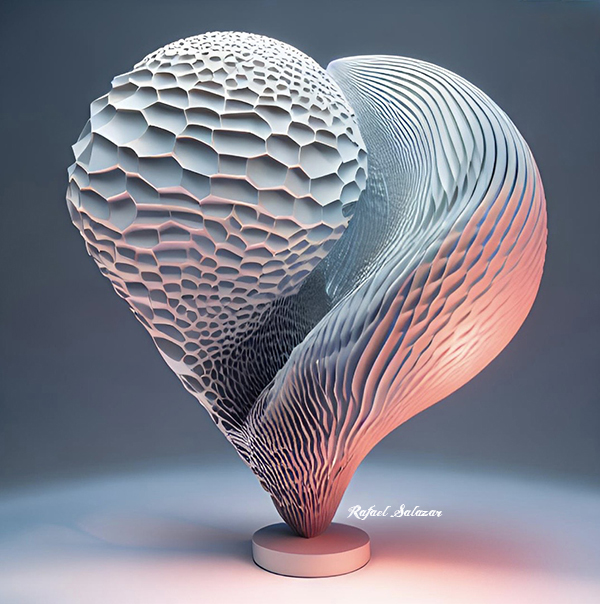
Heart-like abstract sculpture by Rafael Salazar combining cellular textures and flowing linear structures illuminated with soft blue and coral light.
Two systems move toward one feeling.
Cellular and linear structures curve toward one another, joining contrasting visual languages within a single organic form.
Copyright 2026 – All rights reserved by Rafael Salazar.

“Motionalism creates,” Salazar says with a smile. “Motiology explains.”

The distinction allows the visual work and the philosophy surrounding it to develop alongside one another. One communicates through image, form, energy and response; the other provides a framework through which the ideas behind those experiences can be examined.

What also distinguishes Salazar’s work is his perspective on technology and artificial intelligence. While many artists approach AI cautiously, he views it as another creative instrument within a much longer history of artistic evolution.

“Throughout history, artists have always adopted new tools,” he says. “The machine can assist, but emotion, discernment, responsibility, and consciousness remain human.”

For Salazar, embracing new technology does not require abandoning the human element. Instead, the question becomes what the artist chooses to do with the tools available and what human thought, judgement and emotion are brought to the process.
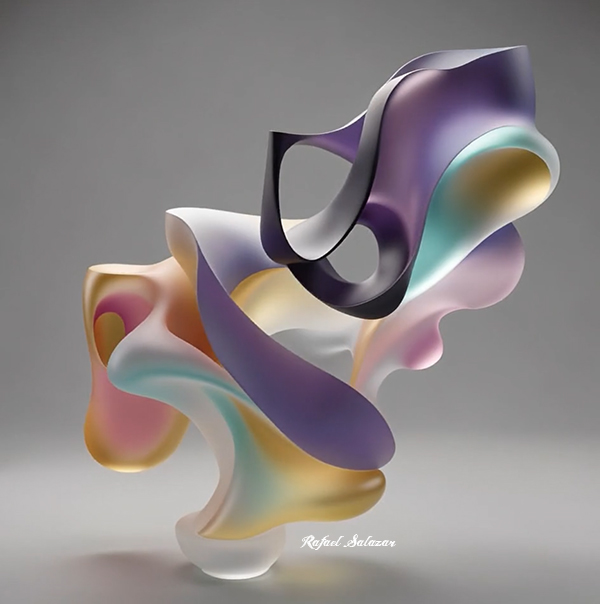
Abstract sculptural artwork by Rafael Salazar with flowing pastel purple, turquoise, pink, gold, and white organic forms.
Color discovers a body in motion.
Soft biomorphic structures rise, twist, and intersect, dissolving the boundary between sculpture, color, and imagined movement.
Copyright 2026 – All rights reserved by Rafael Salazar.

That balance between the future and humanity defines much of his current work. His compositions can feel futuristic, yet deeply personal at the same time, reflecting a world increasingly shaped by technology while still searching for meaning, presence and emotional connection.

It also places his long career in an unusual perspective. Salazar has witnessed enormous changes in the ways art can be conceived, created, reproduced and shared. Rather than treating those changes as a threat to what came before, he continues to explore what they might make possible.

At an age when many artists focus primarily on legacy, Salazar remains firmly oriented towards the future. New collections, publications, philosophical texts and expanded presentations of Motionalism continue to emerge as the movement itself develops.
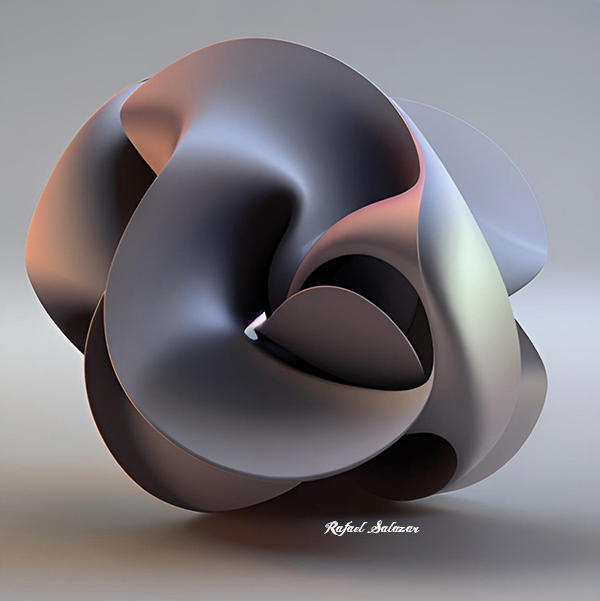
Sculptural abstract artwork by Rafael Salazar composed of dark metallic curved forms with subtle warm and iridescent highlights.
Form turns inward and discovers movement.
Interlocking sculptural curves fold into themselves, creating a continuous exchange between volume, shadow, tension, and space.
Copyright 2026 – All rights reserved by Rafael Salazar.

There is no suggestion that Motionalism has reached a finished form. In many ways, that would contradict its central premise. A philosophy concerned with movement and transformation must itself be capable of moving and transforming.

After more than sixty years of artistic exploration, Salazar therefore appears less interested in arriving at a final destination than in continuing the journey, questioning, creating and responding to a world that never remains still.
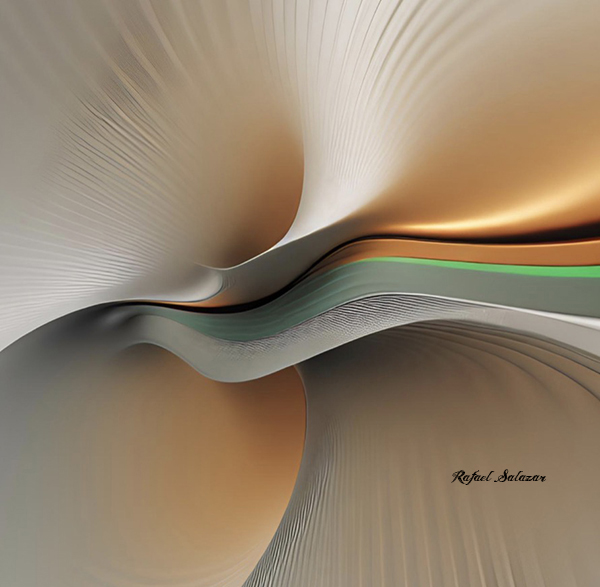
Abstract Motionalism artwork by Rafael Salazar featuring flowing cream, bronze, black, and green forms in continuous curved motion.
Motion bends until perception changes.
Sweeping layers curve, separate, and reconnect across a luminous field, transforming movement into a shifting perceptual experience. 
Copyright 2026 – All rights reserved by Rafael Salazar.

Yet beneath the philosophy, experimentation and innovation lies a remarkably grounded message about the artist’s place within something much larger than any individual career.

“Art existed before us, exists through us, and will continue after us,” he says.

And perhaps that is the simplest expression of the idea behind everything else.

“Where there is movement — Motionalism continues.”

RafaelSalazar.com
Motionalism.com
About.Me
Linkedin
Mastodon
Pinterest
Tumblr
X
WordPress
You Tube
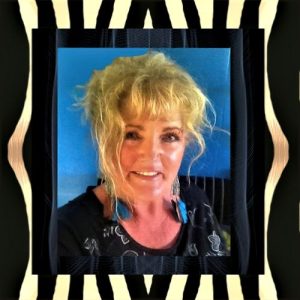
Joan Stratton: Ether, Emotion, and the Art of Layered Life

Website: https://paintingsbyjoan.com/

High up in tropical Far North Queensland, where vivid skies meet equally vibrant ideas, lives Joan Stratton — a contemporary mixed media artist with a palette full of emotion, curiosity, and unapologetic colour. From early days drafting technical diagrams with ink and pen, to her unique “Ether Art” digital works, Joan’s creative path is one of reinvention, resilience, and raw storytelling.

In her sun-drenched studio overlooking lush gardens and flitting sunbirds, Joan creates in a space that’s more like a living memory board than a traditional workspace. Here, digital canvases become portals, each piece whispering its own layered narrative of femininity, landscape, and introspection.

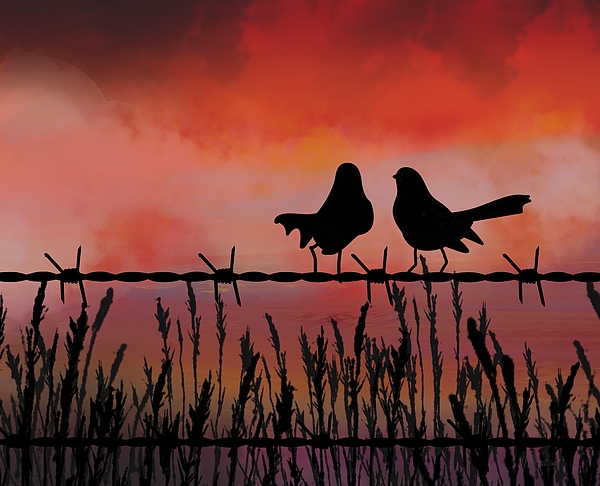
Farm Sunrise For Two ©Joan Stratton All Rights Reserved

“Art has always been with me,” Joan reflects. “It’s my therapy, my compass, my storyteller.” From childhood to now, the relationship has been complex — intense love, occasional resentment, but always return. When other things distracted her from art, or when art pulled her from the world, she felt its grip. It kept her up at night, filled her thoughts, and shaped her days.

Her early years were defined by hands-on creation — painting in oils and watercolours, and technical drawing for engineering and mining firms. She began using CAD software as it emerged, and unknowingly laid the groundwork for her later digital art transformation. “What I do now is not so different from those days of stencils and structured lettering,” she says. “I just use a mouse instead of a pen.”

Joan’s shift into digital art wasn’t a trend-chasing moment — it was born of necessity. Remote living made traditional materials difficult to source and store, so she adapted. She taught herself to draw digitally using a mouse, replicating the painterly processes she knew by heart. The results became her signature style: Ether Art.

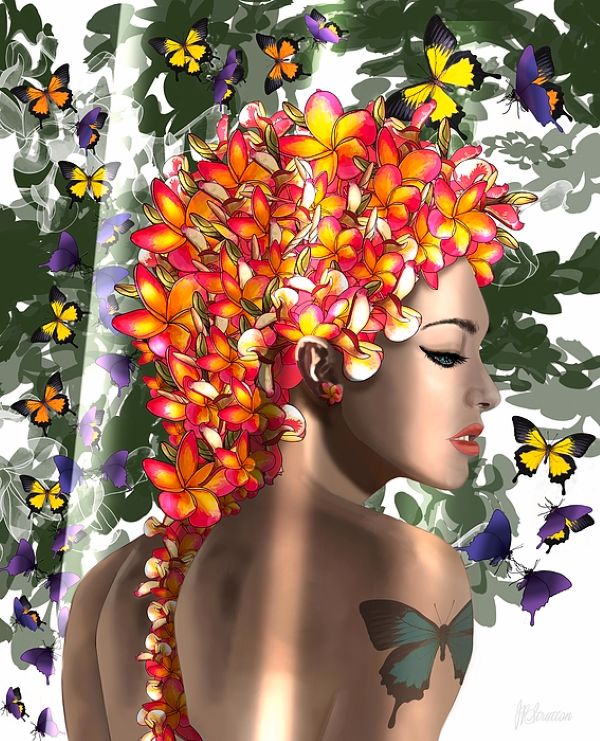
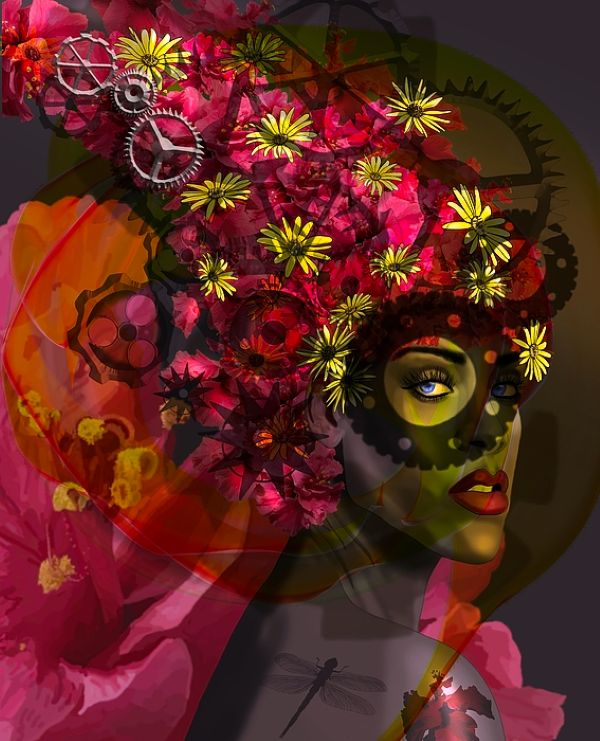
Portrait of a Woman ©Joan Stratton All Rights Reserved

“It starts from nothing,” she explains, “and becomes something layered and alive — a story, a mood, a splash of rhythm.” Some pieces take days or weeks, blending handmade textures, digital brushwork, and imported sketches from paper. Every element is intentional, every detail coaxed into being with care.

Ask her medium what it’s like to work with Joan, and you’d get this answer: “She’s a whirlwind. I never know what I’ll become …. but it always makes people feel.” It’s not far from the truth. Joan treats each blank canvas, digital or otherwise, as a collaborator. She’s playful, precise, expressive, and wild …. often all in one afternoon.

Her work pulls from life and imagination in equal measure …. real textures mixed with dreamlike shapes. Queensland’s heat, the call of birds, old memories and new ideas — they all filter into her colour choices and themes. And somewhere between the real and the imagined, a story emerges.

Joan’s studio isn’t just functional. It’s full of collected beauty …. perfume bottles, shells, books, carvings. “Every corner holds something that sparks a thought,” she says. Behind her are brushes, paper, paints. In front: her digital setup. And always beside her: an A5 sketchpad where future works are born in margin notes and colour scrawls.

Creation often spans six to ten hours a day. Tea in the morning, strong coffee in the afternoon. She jokes about needing a hydration tracker more than a tea tally, but the dedication is real. “I become obsessed,” she says. “I just want to get it all out before it slips away.”

Joan’s art has travelled nearly as far as her imagination. From the Spirit of the Cape exhibitions in 1995–96, to community competitions and solo shows like Up to Now in 2007, her work has appeared across Australia. A highlight: when playwright Barry Dickins referenced one of her pieces in his own poetry during a group exhibit.

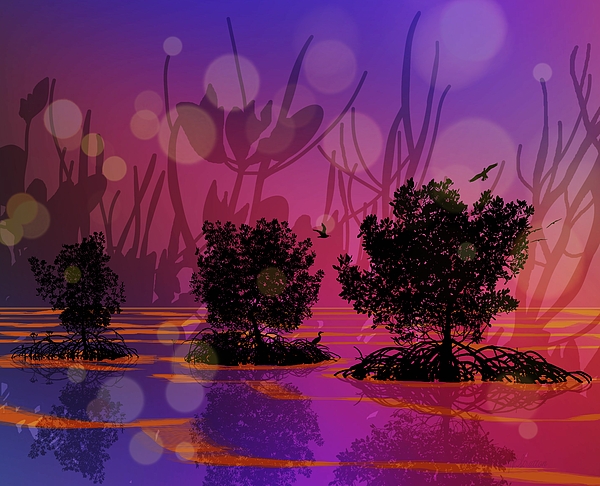
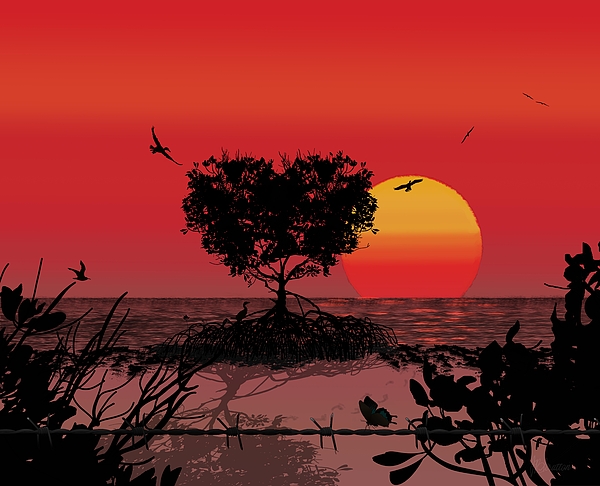
Magical Mangroves ©Joan Stratton All Rights Reserved

Now, her digital paintings are regularly selected for national juried exhibitions …. the Queenscliff Art Prize, Busselton Jetty, South Melbourne Pier, Ballarat, and beyond. In late 2025, five works will be on display at Queenscliff Harbour; in 2026, three more begin a ten-month dual exhibit tour. “It’s all surreal,” she says. “And I’m just getting started.”

Joan is a fierce advocate for copyright, balancing the exposure of online sharing with the reality of image theft and AI scraping. She uses tools like Pixsy and the Australian Copyright Agency to monitor misuse and protect her livelihood. But despite these concerns, she believes visibility is worth the risk ….especially when a single message from a viewer reminds her why she creates.

Late Afternoon ©Joan Stratton All Rights Reserved

Marketing is another layer of the work: she uses Pinterest, social platforms, and SEO strategies to reach audiences far beyond her rural surroundings. “It’s like storytelling,” she says. “Just with keywords and captions instead of brushstrokes.”

Joan’s husband supports her in his own way …. usually surrounded by tools, fixing something while she paints. Her children and wider family are proud, including two artist sisters who share the creative gene.

Blue Eyes ©Joan Stratton All Rights Reserved

She doesn’t often take commissions, preferring to follow her own rhythm, but she’s always open to connection and conversation. When not creating, she finds joy in travel, movies, good food, and the Australian countryside.

Joan sees herself at a crossroads ….committed to her art, but re-evaluating how to connect in an increasingly saturated market. Still, she creates daily, hopeful the right eyes will find her work. “Even when the path feels uncertain, making art still feels like home.”

And for those wondering what’s next? “I’ve just discovered clipping masks!” she laughs. “It’s like unlocking a whole new world.”

Art is not optional for Joan Stratton. It’s embedded in her identity. Her pieces are rich in motion and meaning, shaped by sun-drenched land and years of evolving vision. Whether painted traditionally or conjured digitally, her works invite the viewer to pause, feel, and listen.

“The work tells me the story I’m meant to share,” she says. “I just translate.”

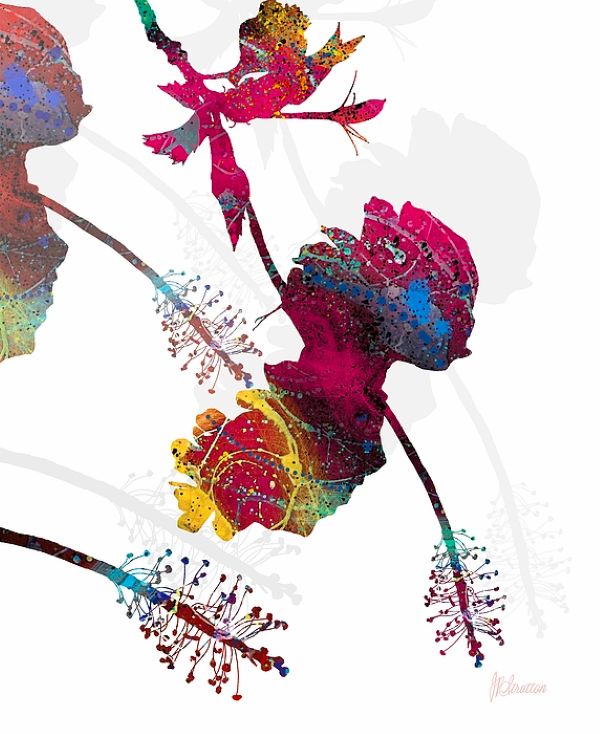
Hibiscus – A Colour Splash ©Joan Stratton All Rights Reserved

Follow Joan Stratton

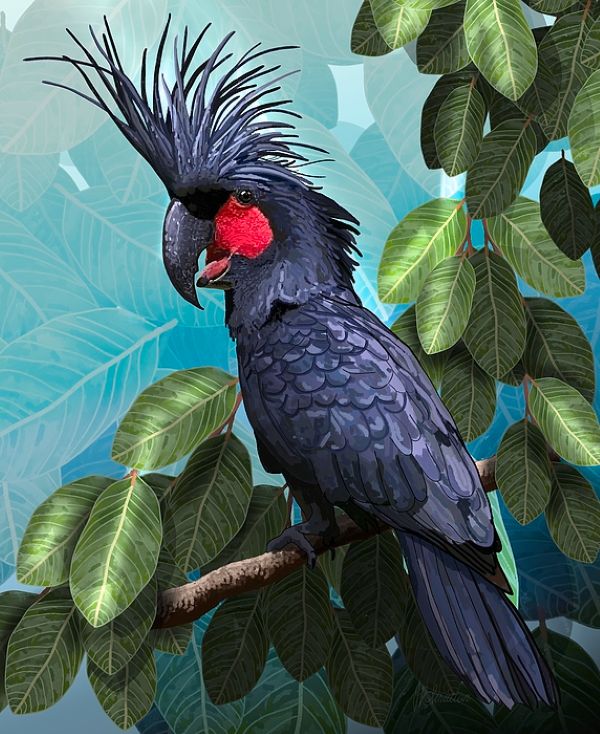
Australian Palm Cockatiel ©Joan Stratton All Rights Reserved

✍️ Submit a Guest Post

Not a member yet? You can still share your creative voice with our readers. We welcome guest posts from artists, writers, and creative souls of all kinds.

Submit Your Article

Share this link with your friends if you enjoyed the post 🙂 See the share buttons below to your right

Our Arts Mag'
Privacy Overview

This website uses cookies so that we can provide you with the best user experience possible. Cookie information is stored in your browser and performs functions such as recognising you when you return to our website and helping our team to understand which sections of the website you find most interesting and useful.