
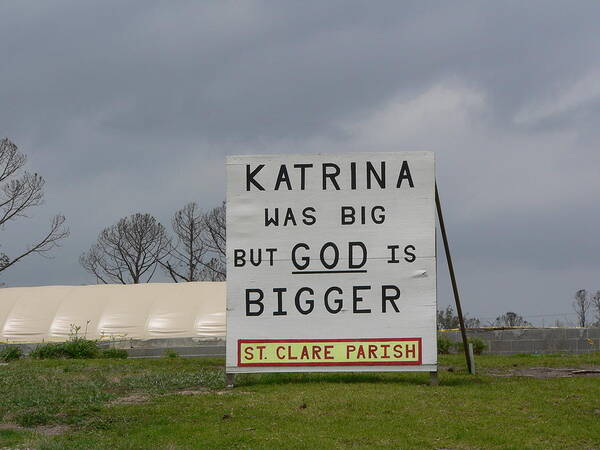
Hurricane Katrina Memories Part One
The decision was made to return this month from my blog writing sabbatical due to the 20th anniversary of Hurricane Katrina, one of the most life changing events in many of our lives.
In reading over the many notes and news articles that I saved from 2005-2009 a few facts and myths about Katrina became clear.
Katrina’s eye made landfall at the mouth of the Pearl River, the coastal boundary between Mississippi and Louisiana. The North/East quadrant of a hurricane produces the most damage and that’s exactly where the Mississippi Gulf Coast was located when Katrina made landfall. Louisiana experienced a man made disaster due to levies breaking unlike Mississippi who experienced a natural disaster.
Katrina was rated as a Category 4 the day it hit the coast and according to one attorney I spoke with, a report from the Hurricane Hunters dropsondes proved Katrina was stronger than reported when it hit Mississippi. Her landfall category was downgraded several weeks later to that Cat 3 rating after government and insurance industry leaders realized how much it was going to cost to clean up and the enormous cost of recovery not because of scientific proof on the ground. Many survivors who stayed on the coast and rode out the storm are convinced that Katrina was a Category 5 when she made landfall. The damage was far worse than any other hurricane to hit the Mississippi coast including the catastrophic Cat 5 Hurricane Camille in 1969.
Katrina was in the process of an eye wall replacement when she hit the coast. That’s the most ferocious and chaotic event in a hurricane’s eye wall life cycle. Straight line, cyclonic, updraft and downdraft winds can occur all at the same time during an eye wall replacement. There was undeniable physical proof of damage due to all of those types of wind events along the Mississippi Coast, including physical proof on our own property, according to an engineer on site.
The insurance industry made BILLIONS of dollars of profit in 2005 and 2006 even AFTER they paid a small percentage of claims. They denied the majority of homeowners’ claims saying most of the damage was caused by the storm surge. Homeowners’ policies contained what was called a “concurrent occurrence” clause which would allow the insurance companies to “legally” deny claims if as little as one inch of water covered one inch of anyone’s property, even if the home was already torn apart by wind (proof on the property) before any water reached the lot. Policy holders were not told or made aware of that clause or exactly what it meant until they questioned the denial of their claims.
Everyone was in the same boat, rich and poor, CEOs and maids. No, everyone was in the same storm but not everyone was in the same boat.
It was as though some people were on a ship, some on a yacht and some others were in canoes in those destructive wind created waves. People who had more financial resources before the storm recovered much more quickly and easily than those who did not have those same resources before or after the storm. Many people never recovered financially or mentally. Twenty years after the storm there are still properties that have not been demolished or cleaned up in some of the less populated and rural areas.
Natural disasters bring out the best in people. Yes, but they also bring out some of the worst of humanity.
Greed, theft and utter disregard for others ran deep as Katrina’s clean up and recovery evolved. I personally experienced both the best of others and the worst during the storm’s aftermath and I confess that I’m not proud of everything I did and said during that time.
Since Hurricane Katrina, people that I know personally have been effected by other natural disasters that have included wind and flooding rain including Super Storm Sandy and more recently Hurricane Helene. I hope that I have been helpful in sharing some of my perspectives and lessons with those folks.
Be sure to visit this blog site in the next few weeks for several more memories and lessons from my experience of one of the worse natural disasters to hit the United States. I will be posting about my experience each week this month.
Until then you can see a few of the thousands of photographs that I took during that time by looking through the Photojournalism Collection on my web site. Click here to access that site.

